Visa Applications For the Schengen Zone
For Travel to Europe
Click Below To Start An Application
Important Travel Document Information – Please Read
A Schengen visa is a document issued by a Schengen State. It permits the holder to remain in the Schengen Zone for a maximum of 90 days in any 180-day period (“short stay visa”) and transit via the Schengen States international transit zones (“airport transit visa“). Additionally, you may remain for a period greater than 90 days if you have a Schengen national visa / residency permit. When you apply, they all come under the category of Schengen Application.
Please apply well in advance of your trip date, since most Embassies / Visa Centers are under high demand and have long waiting times.
The validity of your single-entry visa or double-entry visa, with the exception of a multiple-entry visa, which allows you to stay in the Schengen region for a maximum of 90 days during a 180-day period, is determined by the embassy. The number of days you are allowed to spend in any of the Schengen countries, as well as the first day you are allowed to enter and the last day you are allowed to leave, are all determined by the embassy.
Many people become perplexed at this point because they are unaware of the distinction between visa validity and the term of stay in a visa.
The maximum number of days you are allowed to stay in Schengen is the duration of your stay. Even if you enter just a few minutes before midnight, the first day you enter Schengen is considered as “Day 1.” The “Last Day,” on the other hand, is the day you leave Schengen, even if it is only a few minutes after midnight.
Visa validity, on the other hand, refers to the length of time you can enter and stay in the Schengen Area using your visa.
For example, your visa allows you to stay for ten days, yet the validity of your visa is from January 1 to January 20. In this situation, you are free to enter the Schengen Zone at any point within this time frame. You can arrive on 3 January and depart on 12 January, for example. On the other side, even if you arrive on the 15th of January, you must depart on the 20th, despite not having spent the maximum number of days allowed.
If you hold a double-entry visa valid from January 1 to March 1 and a stay of 10 days, you can enter the Schengen Area twice during that time. During both travels, you are still not allowed to stay longer than 10 days. If you stay seven days on your first trip, you can only stay three days on your second trip. Even if your visa is still valid, you will not be allowed to enter the country if you make only one journey and stay 10 days in any of the member states.
If you have a three-year multiple-entry visa that expires on January 15, 2018, you will be able to enter and depart Schengen whenever you choose until January 15, 2021. It is important to remember that each 180-day term has a 90-day restriction.
| AustriaAustria joined the Schengen Area as an EU member state in 1997 and since then, foreign visitors have been allowed to apply for an Austrian Schengen Visa. | BelgiumIn 1995, Belgium’s government ratified the Schengen Agreement to become a member of the European border-free zone. A Belgian Schengen Visa is available to foreign tourists. | CroatiaCroatia joined the Schengen agreement in January 2023 and became the 27th Schengen member state. Travellers to Croatia can now apply for a Schengen visa. |
| Czech RepublicWhen the Czech Republic joined the Schengen Area as an EU member state in 2007, you are able to apply for a Czech Republic Schengen Visa. | DenmarkWhen Denmark joined the Schengen Area as a member state of the European Union in 2001, you can apply for a Danish Schengen Visa. | EstoniaWhen Estonia joined the Schengen Area as a member state of the European Union in 2007, you can apply for an Estonian Schengen Visa. |
| FinlandFinland joined the Schengen Area as a European Union member state in 2001 and since then you can apply for a Finnish Schengen Visa. | FranceSince 1997, it has been possible to apply for a France Schengen visa, as France joined the Schengen Area as a member of the European Union. | GermanySince 1995, travellers who have been approved for a Schengen Visa have been able to enter Germany as they joined the Schengen Area as an EU member state. |
| GreeceGreece joined the Schengen Area as a member state of the European Union in the year 2000 and you have been able to apply for a Greek Schengen Visa since then. | HungaryWhen Hungary became a member of the Schengen Area as well as a member of the European Union in 2007, you have been able to apply for a Hungarian Schengen Visa. | IcelandWhen Iceland joined the Schengen Area as an EFTA member in 2001, foreign travellers have been able to apply for an Icelandic Schengen Visa. |
| ItalyForeign travellers who wish to go to Italy for a short period of time can do so by getting an Italy Schengen Visa. The Schengen Area includes San Marino as well as the Vatican City, all visas for these locations are handled by the Embassy of Italy. | LatviaWhen Latvia joined the Schengen Area as member of the European Union in 2007, you have been able to apply for a Latvian Schengen Visa. | LiechtensteinLiechtenstein was the 26th country to sign the Schengen Agreement and join the Schengen Area as of February 2008. |
| LithuaniaLithuania joined the Schengen Area as a European Union member state in 2007 and you can apply for a Lithuanian Schengen Visa. | LuxembourgLuxembourg is one of the founding member states of the Schengen Zone, which was established on June 14, 1985 in the village of Schengen in Luxembourg. | MaltaSince Malta joined the Schengen Area as a member state of the European Union in 2007, you have been able to apply for a Maltese Schengen Visa. |
| NetherlandsThe Netherlands joined the Schengen Area as a member state of the EU in 1995 and you have been able to apply for a Netherlands Schengen Visa since then. | NorwayWhen Norway became a part of the Schengen Area as an EFTA member in 2001, you have been able to apply for a Norwegian Schengen Visa. | PolandWhen Poland joined the Schengen Area as a member state of the European Union in 2007, you are able to apply for a Polish Schengen Visa. |
| PortugalWhen Portugal joined the Schengen Area as a member state of the EU in 1995, you have been able to apply for a Portuguese Schengen Visa. | SlovakiaSlovakia joined the Schengen Area as an EU member state in 2007 and you have been able to apply for a Slovakian Schengen Visa since then. | SloveniaWhen Slovenia joined the Schengen Area as an EU member state in 2007, you have been able to apply for a Slovenian Schengen Visa. |
| SpainSpain joined the Schengen Area as an EU member state in 1995, you can apply for a Spain visa. | SwedenWhen Sweden joined the Schengen Area as an EU member state in 2001 you have been able to apply for a Sweden Schengen Visa. | SwitzerlandWhen Switzerland became a member of the Schengen Area as an EFTA member in 2008, you have been able to apply for a Swiss Schengen Visa. |
You must apply for a residency permit or national D-Visa, rather than a Schengen Visa if you plan to stay in Europe for more than 90 days.
Your long-stay visa must be for a period of three months to one year, regardless of the length of your anticipated stay. You must apply for a residence permit at a prefecture in order to prolong your stay beyond the duration of your visa.
The long-stay visa is comparable to a Schengen visa throughout its validity term, allowing you to travel and remain in the Schengen Zone for up to 90 days in any 180-day period, under the same circumstances as if you had a Schengen visa.
If you are a citizen of a country that can visit the Schengen zone without a visa, then you may travel visa-free and apply for your national visa
One of the most well-known reasons for visiting the Schengen Zone is for tourism. However there are many reasons you can list as your travel purpose on your application such as:
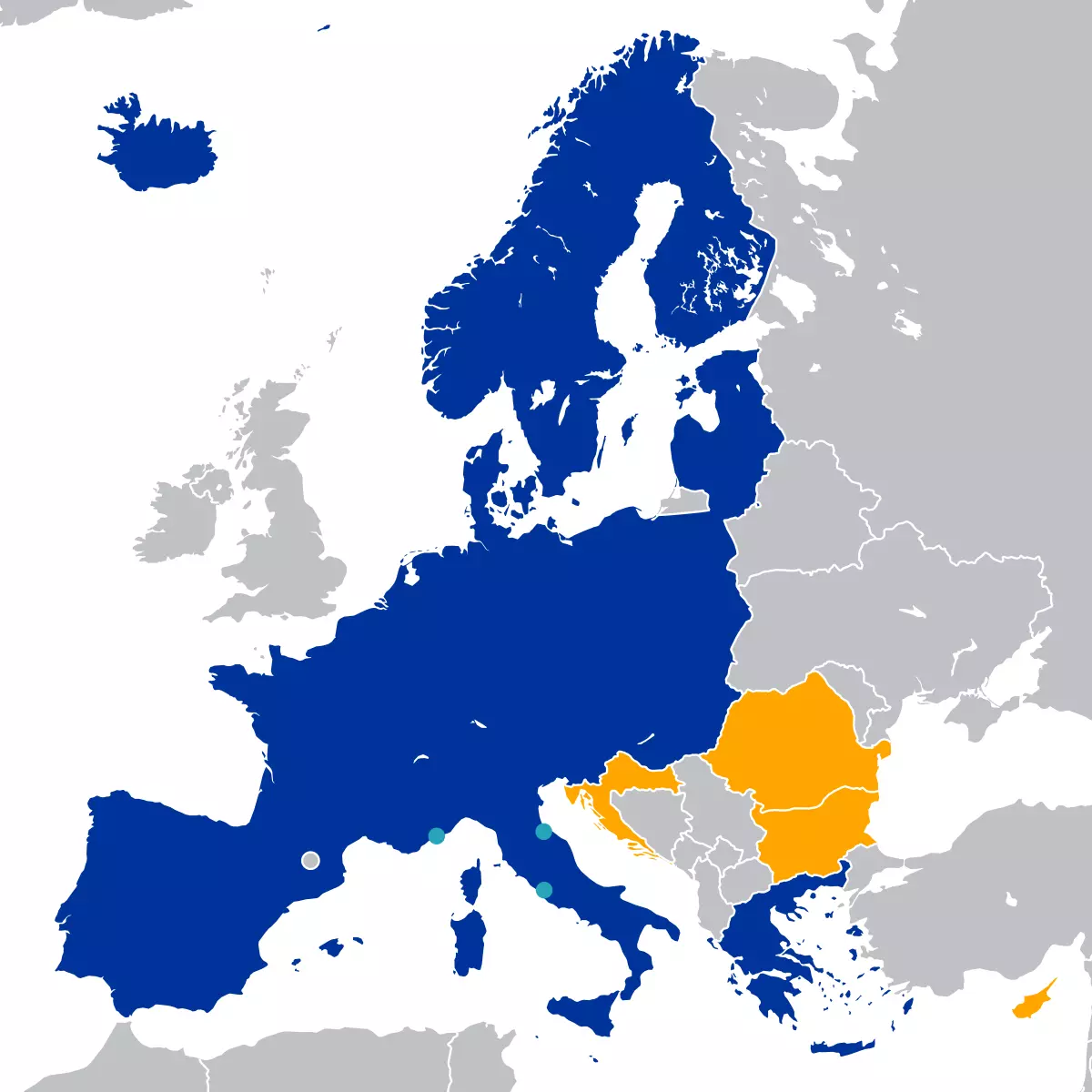
There are 27 countries in Europe who have abolished their internal borders under the Schengen Agreement. The Schengen Zone covers most of the EU countries, except Ireland and countries such as Romania, Bulgaria, Croatia and Cyprus. Scroll further to see a full list of each country in the Schengen zone.
The Schengen Zone is a group of 27 European nations that have formally eliminated all forms of border control at their shared borders. The region mostly works as a single jurisdiction for the purpose of foreign travel, with a unified visa regime called the Schengen Visa which allows third-country nationals to visit the area.
A Schengen Visa is required for any third national wishing to enter the schengen zone. It could be a short-stay Schengen C-visa for stays of up to 90 days or a national D-visa / residence permit for longer stays in the country.
You have the right to challenge this judgement. A standard form is distributed by the consulate of the Member State that decided to deny the visa in order to notify the applicant of the decision to deny a Schengen visa as well as the grounds for denial. People frequently inquire us how we can “ensure” the granting of a visa. The short answer is that there is no way to get a 100% assurance because the embassies make all final decisions. Making ensuring your application is as strong as possible is all you can do, though. Please contact us if your application for a visa has been denied.
This depends on a number of things such as whether or not you have had a Schengen visa in the past or how many countries you intend to visit. Generally you first Schengen visa will be issued for the duration of your stay. Future Visa Applications may be granted for multiple entry for a number of years.
There are 27 Schengen members states in Europe. You can see the full list of countries in the Schengen zone above.
You can expect an update on any Visa Applications within 3 days of submission. You can choose express processing at checkout for a response within 24 hours.
Once you attend your appointment, your visa can take up to 15 working days to be processed by the Embassy.
Schengen began in 1985 with just six member nations. The UK withdrew from the project, citing a lack of interest in abolishing border restrictions due to its island-like nature.
The name “Schengen” derives from the tiny winery town and commune of Schengen in far southeastern Luxembourg, which hosted the signing of the Schengen Agreement by France, Germany, Belgium, Luxembourg, and the Netherlands.
Fortunately, the majority of European governments have eased entrance restrictions and eliminated temporary internal borders in recent years. While travel between several EU member states is permitted without restriction, some countries impose extra entrance criteria. Generally, Schengen nations do not have robust borders.